Slides
Videos
Thank you for joining us!
Speakers

Serverless DevOps
Aaron Powell
Microsoft

Tour of Dapr: a runtime for microservices development
Abhishek Gupta
Microsoft

Together in COVID-19: Health of India
Aditya Raman
KonfHub
Stepping into the world of Open Source
Anisha Swain
Red Hat

Running Elasticsearch {Stack} on Kubernetes
Aravind Putrevu
Elastic

Build a sentiment analysis Bot by Integrating A2019 (RPA platform) with Microsoft Azure cognitive services
Arjun S Meda
Automation Anywhere

End to End machine learning model development using Microsoft Azure
Arpita Gupta
Accenture
How open source contribution helps in AI
Chinmaye Jain
Witsy limited

Raspberry Pi Air quality monitor and Azure IoT Central
Dave Glover
Microsoft

Containerize Microservices with Service Fabric
Hamida Rebai
Revenu Quebec

Understanding ML through Memes
Harsh Aryan
Microsoft Student Partner

Build and deploy PyTorch models with Azure Machine Learning
Henk Boelman
Microsoft
4K Streaming in Cloud with Kubernetes, Knative, Kafka, Kamel
Kamesh Sampath
Red Hat

Accelerating deployment with Azure DevOps
Leena N
Yoga Tree
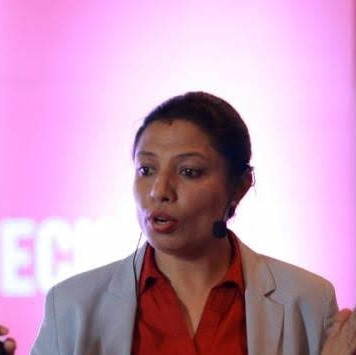
Building, Deploying and Managing Microservices-based Applications with Azure pipeline and AKS
Mamta Jha
TechScalable
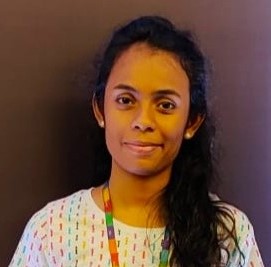
Leading Edge of Modern Web Apps on Azure
Menaka Basker
Accenture Digital

My experiences building CloudSkew (a browser-based, real-time diagram editor on the cloud)
Mithun Shanbhag
Skewed Ventures

Accelerating deployment with Azure DevOps
Murughan Palaniachari
EY

Service Mesh and Why You Should Use It
Nancy Chauhan
Grofers

Diving into the world of spell checks!
Niharika Krishnan
Tata Consultancy Services
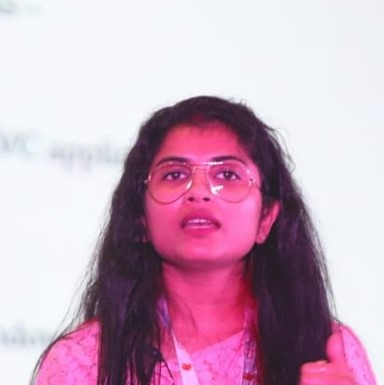
Understanding Azure Batch Service
Niloshima Srivastava
Vichara Technologies
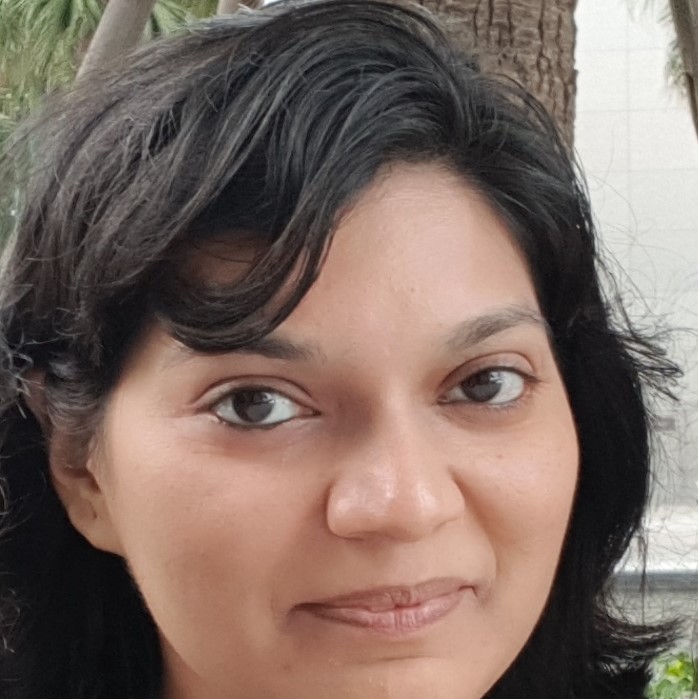
Machine Learning with Azure Cognitive Services: Face Recognition and Deep Fake Detection
Priyanka Shah
Franklin Templeton

Identifying People Wearing Masks from Image using Cognitive Services
Ritesh Modi
Hon. Regional Director Microsoft

Life is what YOU make it!
Sandeep Kanabar
NortonLifeLock
The World of Containers with - Podman, Buildah, Skopeo.
Seema Saharan
Mentor and Open Source Contributor
Intro to debugging Django and Building insights
Sayantika Banik
Continual Engine

Natural Language Processing using Azure
Usha Rengaraju
Infinite-Sum Modeling

MagicScaling event pipelines with Keda & Virtual Kubelet
Vishal Biyani
InfraCloud Technologies

AI/ML solutions to tackle COVID-19
Vivek Raja
15x Hackathon Winner
Conference Day-wise Themes

Day 1: Cloud Native
17 June 2020
Day 2: AI & ML
18 June 2020

Day 3: Serverless, DevOps ...
19 June 2020
AGENDA
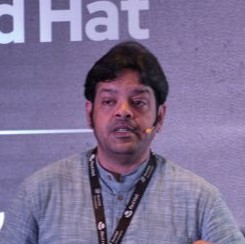
Staring 2019, we started to see “Serverless” taking center stage in all application architectures with enterprise integration and data streaming being no exception. With Kubernetes becoming the standard to run your application workloads in cloud, there isn’t’ one simple way to build highly scalable platform to integrate streaming data and enterprise applications without compromising enterprise compliance. In this session we will explore the four pillars Kubernetes,Knative,Kafka and Kamel to know how they help you build the much needed platform for enterprise integration and data streaming which can scale to infinity without comprising on your cloud resource costs.
Elasticsearch is the world's most popular open source search engine. Kubernetes (k8s) is the popular container orchestration engine giving developers the flexibility to run all sorts of workloads easily. Elastic launched the Elasticsearch k8s operator sometime ago. With this, one can not only run Elasticsearch on k8s but also can launch other Elastic Stack solutions like APM Server. Help run rolling upgrades, manage data etc.
Dapr (or Distributed Application Runtime) is a portable, event-driven runtime that makes it easy for developers to build resilient, microservice stateless and stateful applications that run on the cloud. This talk provides an overview of Dapr, how it works and enables distributed application development. Dapr simplies things by codifying development best practices into open, independent, building blocks that enable you to build portable applications with the language and framework of your choice. The talk also goes deeper into these components such as state stores, messaging, resource bindings etc. along with demos to see things “in action”.
What do you do when life throws you a curveball? How do you handle interview phone calls when you have lost the ability to hear? How do you deal with a client when you are unable to lip-read him? Laced with humour and real life experiences, this talk is about how Life is what YOU make it!
Join Dave Glover and learn about the pollution monitor solution he built and used during the Australian bush fires. You will learn about using Visual Studio to build a Python application on a Raspberry Pi, and how to create a free IoT Central application to chart the current pollution levels.
I'll talk about lessons learnt, key decisions & trade offs made while building cloudskew.com, an online editor for creating cloud architecture diagrams. Some topics I'll touch upon:
- Why PaaS + Serverless instead of IaaS?
- Horizontal auto-scaling
- Queue based load
- levelling
- Centralized configuration management
- Debouncing calls to server
- Continuous Integration vs deployment vs release
- Upcoming architectural changes to handle scale
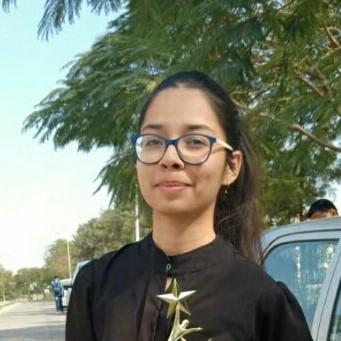
Are you bored of installing Virtual Machines(VM) every time, and waiting for the time to install one? Are you still doing all your Linux container management using an insecure, bloated daemon? In this era, we are using containers in the IT industry, there are many container tools present in the enterprise. I will be talking about the three daemon-less Linux Container tools i.e. Podman, Buildah, and Skepeo by Redhat.
The health of India is an initiative to fight against the pandemic COVID-19. This is an open-source project, where we collect health data from people living in different parts of the world. We are trying to sufficient and efficient nationwide self-assessed database of people who are showing symptoms of COVID19. This database can be used by developers and concerned authorities to establish some relationship between the geographical areas, climatic conditions, age and health condition of the people. Use cases of these data and still trying to figure out more - Help data scientists forecast the next outbreak - Channelize government sanitization efforts in places where sick patients are found. - Find symptomatic and infected patients near you - See real-time data of COVID-19 patients on the map.
Service Fabric is the foundational technology introduced by Microsoft Azure to empower the large-scale Azure service. In this session, you’ll get an overview of containers like Docker after an overview of Service Fabric, explain the difference between it and Kubernetes as a new way To Orchestrate Microservices. You’ll learn how to develop a Microservices application and how to deploy those services to Service Fabric clusters and the new serverless Service Fabric Mesh service. We’ll dive into the platform and programming model advantages including stateful services and actors for low-latency data processing and more. You will learn: Overview of containers Overview of Service Fabric Difference between Kubernetes and Service Fabric Setup Environment to start developing an application using Microservices with Service Fabric.
We are in midst of Covid19 crisis and I have created a solution to find out from images whether people are wearing masks. In this session, I am going to take the audience through the usage of entire technology stack for creation of this solution. We will go through provisioning of Cognitive services, types of models that can be generated like classification and object detection, training and testing the model and finally deploying the model. After the deployment of model, we will be creating a simple user front end that can help send image data to the trained model to identify masks within Images. We will also discuss ways to make such an application production ready by evaluating deployment to Azure Functions or on Kubernetes as pods. This is demo heavy session and hope to see you all there!
Azure Cognitive Services are a powerful way to plug in AI/ML in our apps by way of API made available to developers. Azure offers plethora of AI services like decision making, speech, computer vision, search, language modelling etc. Let us see how Azure Computer Vision Services enables us to implement face detection and recognition in the cloud and train our custom machine learning models.
Natural language processing supports applications that can see, hear, speak with, and understand users. Using text analytics, translation, and language understanding services, Microsoft Azure makes it easy to build applications that support natural language.
This session will guide through the process followed for development of machine learning model on Microsoft Azure from creation of machine learning model to deployment.
Take a deep look into Azure Machine Learning, a cloud service that helps you build, train, deploy, and manage models. Walk through the data science process and then have some fun creating a ML recognition model based on the Simpsons cartoon with PyTorch. You'll leave this session with a better grasp of the technological components of Azure Machine Learning services.
Intelligent Automation is assisting organizations in their Digital transformation journey and it requires a combination of tools to automate complex scenarios. We will discuss about how to build a sentiment analysis bot by extracting data from web portal, passing it to Azure cognitive services to analyse the sentiment and display the results in a dashboard.
How you can utilise your skills and mould it in accord. Increasing your functionality and expanding your knowledge horizon by helping many companies in indirect ways.
The entire world is going through a pandemic and it necessary that technology must help people to safeguard themselves. I am going to elaborate a few interesting use cases of AI/ML which can be used to tackle COVID-19 effectively and how to build the ML models using Cloud ML pipelines.
An gentle introduction to Machine Learning and all the basic concepts through memes. A fun and informative session, a beginner's haven.
In this talk you will understand why DevOps and the power of Azure DevOps which helps in automating build & release process faster for multiple languages & framework.
Serverless components can sometimes feel a little cavalier in their creation, a single script file and little-to-no dependencies, so it can be quite tempting to just deploy them through a “right click -> publish” model. But we know we shouldn't do it that way, we know we should apply a proper DevOps model with Continuous Integration and Continuous Deployment. So let's take GitHub Actions for a spin to look at just how simply we can add CI/CD to our repository and get our components deployed into the cloud. We'll have a look at how we can do things like release promotion across environments, securely manage the credentials our app needs to ensure we are doing safe, secure and repeatable deployments.
- Setup AKS cluster on Azure
- Deploy a sample microservice-based highly available and scalable app to the cluster
- Set up Azure pipeline for CI and CD
- Automate deployment of the application on Git commit to AKS cluster
Ever missed a spelling mistake in an important email to your supervisor but were super relieved that it got auto-corrected? Let’s understand what happens under the hood. This talk introduces the algorithm behind handling typos, the various Natural Language Processing techniques available and how you can tweak them for your use-case!
Many applications today are event-driven - which means the workload varies from time to time. Would it not be nice that most of the components in the pipeline are scalable dynamically? This demo will showcase the scalability of triggers with Keda and scalability of processing components with ACI using Virtual Kubelet - almost MagicScaling in the works!
Microservices techniques and culture ultimately help us continuously improve business at a faster pace than traditional architecture. However, microservices architecture itself can be complex to configure. Usually, we have cross-cutting concerns such as service discovery, service-to-service, and origin-to-service security, observability, and resiliency. This talk is about Service mesh, which addresses these challenges where the implementation of these cross-cutting capabilities is provided by the infrastructure. Service mesh offers consistent discovery, security, tracing, monitoring, and failure handling without the need for a shared asset such as an API gateway or ESB.
-
The session will cover -
- Overview of Batch Services
- Demo of Batch Services
- Code Samples
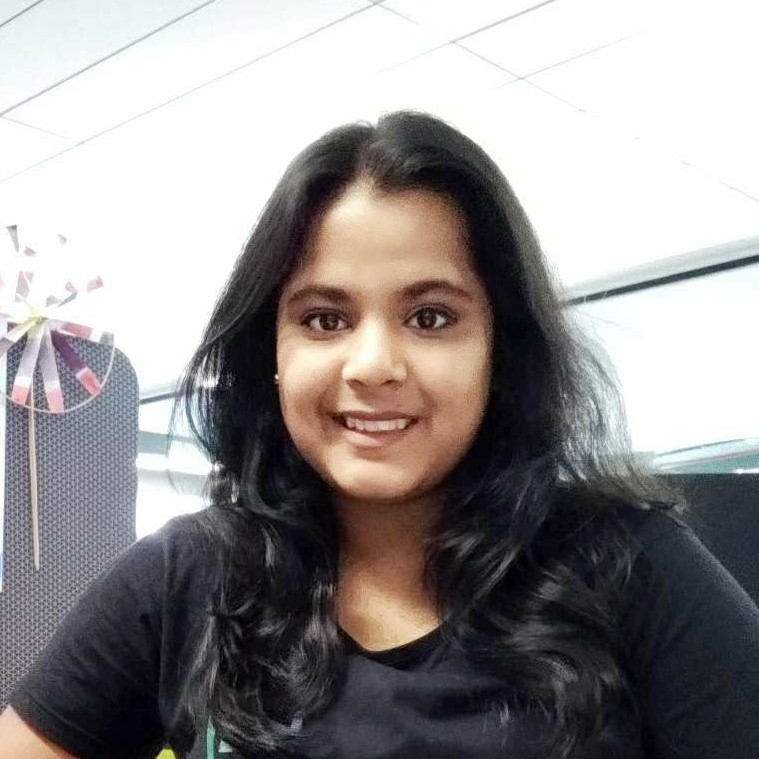
The proposed talk will briefly explain about the history of Open Source trend and provide a subtle overview of the concept of Open Sourcing Technology. As we know, Open source software is software with source code that anyone can inspect, modify, and enhance but there is much more to that. We will lucidly talk about if "Open Source" just mean something is free of charge and what is "Open Source" beyon software. It will also provide with the insights on how to get into Open Source and how to get started with Open Source project for beginners.
In this session, we will explore how to deploy .net core web apps in azure Kubernetes service using azure DevOps starter and Azure DevOps.
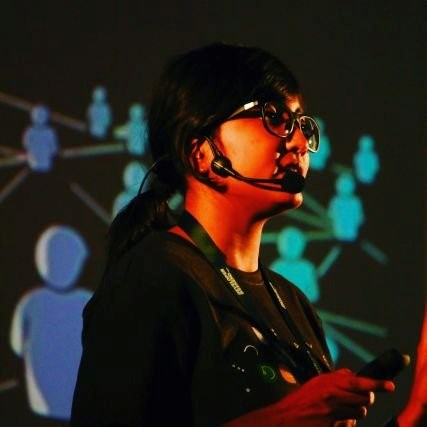
Print statements though easy and powerful don’t help in understanding the behavioral aspects. In order to perform functionalities like visualizing the error/warning rates, we need an advanced debugging tool. Through my talk, I aim to introduce debugging libraries like “logger”. Logger can be incorporated with Django with a couple of lines of code, which not only helps us understand the errors, but also the possible areas of improvement.










.jpg)